OUR SYSTEMS
The Indy-23 system
King Valley Aquaponics
The system that helped shape how we learnt to grow fish and plants together.
The system that helped shape how we learnt to grow fish and plants together.
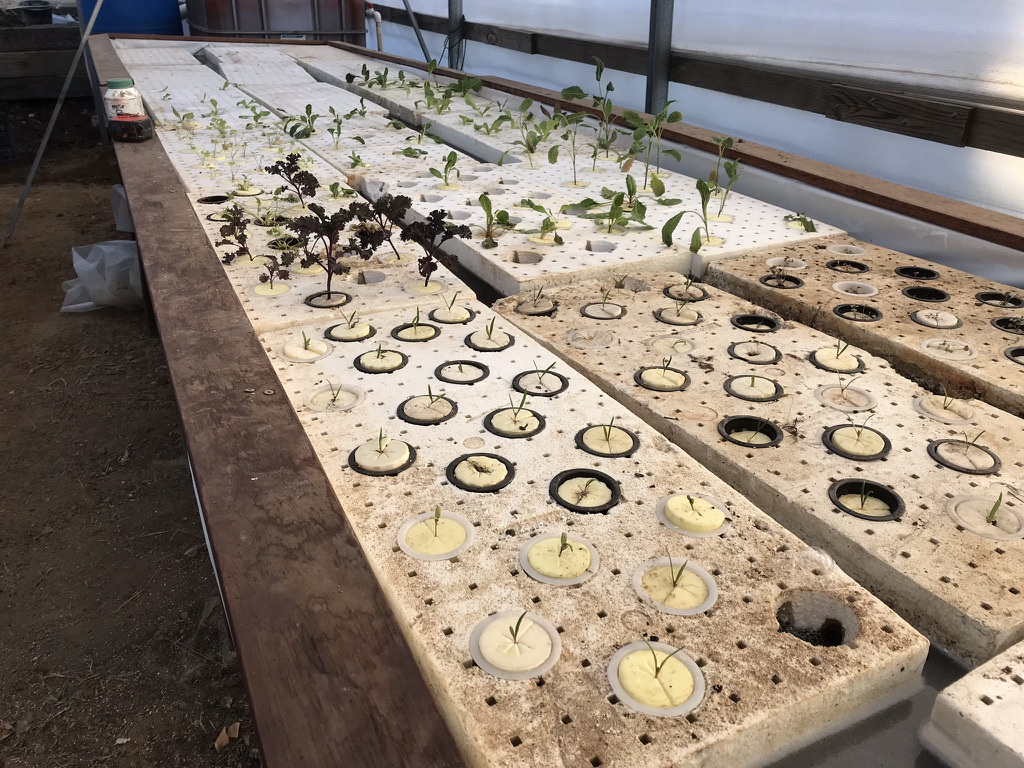
Our aquaponics journey included training with Murray Hallam and Practical Aquaponics, and the Indy-23 approach became an important influence on the system we operated in North East Victoria.
What made the system valuable to us was the chance to run different growing-bed methods side by side. Fish production, filtration, pumping, aeration and plant production all had to work as one recirculating system, while each bed type behaved differently.
These beds repeatedly flooded and drained through solid media. We found them especially useful for propagation and herbs because young roots received moisture while each drain cycle pulled fresh oxygen back through the root zone. The media also supported the plants and provided a large surface area for beneficial bacteria.
Plants sat in holes in floating foam rafts with their roots hanging directly into continuously aerated water. We reused foam raft material left over from the tobacco-growing era in North East Victoria. This method suited leafy greens and other quick-turnover crops particularly well.
These beds kept a more stable water level through solid growing media. The media gave larger plants physical support, kept the root zone consistently moist and added more biological surface area to the system.
The beds were only one part of the system. Fish tanks, pumps, aeration, plumbing, filtration and water quality all affected how well the plants grew. Operating the system through changing seasons taught us that fish health, plant demand, oxygen, temperature, pH and water flow all have to be managed together.